MUED4602 Task 3 Week 3 – Lesson 7: Eliza’s Aria

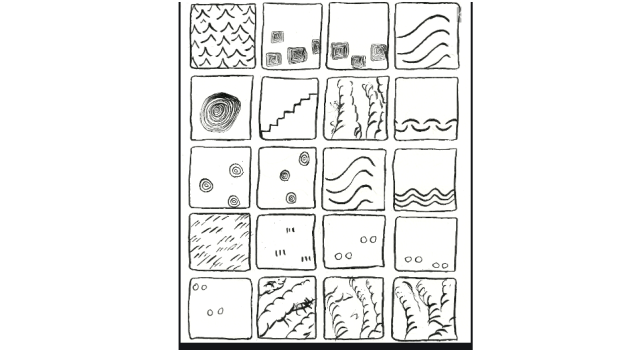
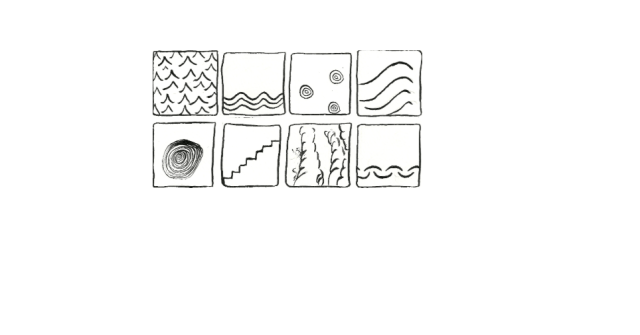
There were 2 new resources this week, a graphic arts notation resource and a HSC extended response question. The graphic arts notation came from https://katebilton.wixsite.com/ecp711/lesson-two-j7iai. The only thing I did, is cut some of the images out as I thought they were too similar and would have been hard to distinguish between.

Original

My edit

I made a HSC extended response question basing it off ideas I found on Canvas and how relatable it would be to the development of students learning in my program. I included some starting points for discussing on tone colour, which were taken directly from the Music 2 syllabus. This would be preceded by a very brief glimpse of Eliza Aria Aural analysis also from Canvas, to give students an idea of how and what to write without giving them the answers.

MUED4602 Task 3 Week 2 – Lesson 5: Eliza’s Aria ‘Mini Composition/Arrangement Project continued’

The intro DAW activity is a good way to introduce another work of the unit and mix up the type of activities that the students engage in. The manipulation of a wav file in a DAW, will broaden the student’s knowledge of the capabilities of technology. Lidy’s Piece by Kate Moore will peak student’s interest as it features many extended techniques on the cello; this will facilitate creativity as something simple as trimming a loop and adding a drum beat can result in each new piece having a vastly different character. I created the Diary Guide Sheet as a way to keep the mini project diary entries music-focused. It will help students make entries, critically think about the concepts of music, reflect on the learning process and prepare themselves for future assessments in high school and tertiary education.

MUED4602 Task 3 Week 2 – Lesson 4: Eliza’s Aria ‘Mini Composition/Arrangement Project’

The introductory sight-singing activity not only helps students practice their sight-singing which is an integral part of the unit, but also preludes the idea of arranging music by moving musical ideas around in a different order. In the cut outs, I used C major 4/4 time; there is a lot of logical steps and leaps to the melody but if they are rearranged a certain way, intervals such as a 6th can appear. This makes for an interesting activity as students can anticipate difficulties that may occur and distinguish between good and poor phrasing. The ‘Compositional techniques’ sheet was designed to scaffold the process of applying the techniques of fragmentation, augmentation and retrograde to music material. There are clear demonstrations/examples and a small activity at the end where the students can explore innovative approaches to complete the task; the activity can be used in their mini-project which can be a good starting point. A fun extension would be for a student to project their finished arrangement and have other students work out what techniques they used and where. In ‘Eliza’s Aria Arrangement Guide Sheet’ the students are carefully guided through a step by step process to ensure maximal success. It is differentiated so there are a few approaches to completing the task:

  • You can adhere closely to an original arrangement e.g. string quartet version and write a new section e.g. use compositional techniques to write a new ‘B’ section
  • You can arrange it for a different instrumental ensemble that hasn’t been done before
  • Use DAWs like soundtrap/garageband to use the arrangement (the video below was listed in resources for the ‘listen to arrangements’ section of this lesson; this would be a good example of how it can be done)

So there are many ways to complete the task, the more innovative the better. The good thing about the ‘Arrangement Guide Sheet’ is that it simplifies the composing/arranging process and when they are done planning I can review it and make sure they are on track to a successful arrangement. There will be a few lessons to complete this and some teacher guidance so students won’t feel overwhelmed.

MUED4602 Task 3 Week 1 – Lesson 2: Eliza’s Aria, Swan Lake and Hungarian Folk Dance

As I was reading about Elena Kats-Chernin, I discovered some musical influences of hers, and thought it would be beneficial for students to engage in some study of their work. I incorporated a work from Tchaikovsky and Brahms for a melodic dictation, performance activity and comparative analysis in order to give a broader scope of the conception of ‘Eliza’s Aria’ and the musical background of Elena Kats-Chernin herself.

Audio excerpt for Tchaikovsky – Theme from Swan Lake

Audio excerpt for Brahms – Hungarian Dance No.5

Manuscript excerpt for Swan Lake and Hungarian Dance No.5

I selected these pieces as they shared some similarities with ‘Eliza Aria’ and had parts that were suitable for melodic dictation at this stage of learning. I downloaded the YouTube files and edited them in Soundtrap only selecting a suitable portion of the piece (in relation to difficulty). The Manuscript excerpt will be a 2-sided sheet where it is differentiated for those who can do the melodic dictation with very little assistance and those who need more assistance. I tried to be as strategic as possible when it came to revealing notes; not revealing step-wise scale movement or leaps that could be identified within reason.

I found a quote on Chernin’s musical influences and thought it would be useful for a classroom discussion covering topics like the nationalities of the composers, the context of their compositions and identifying similarities/differences between their music and Chernin’s music.

I made this PowerPoint Slide on Elena Kats-Chernin for the class discussion

(Article on Elena Kats-Chernin which features the quote on the slide)

I created a Guided Comparative Analysis Sheet to assist students in the comparative analysis but also to use it as tool to help them distinguish the concepts of music and how to match them with what they are hearing.
MUED4602 Task 3 Week 1 – Lesson 1: Eliza’s Aria ‘Internet Scavenger Hunt’

I decided to create a simple yet fun activity that I think it will help break up the tone of the lesson. This way the lesson is not all notation reading, not all strictly teacher-directed and it allows students to use devices. Knowledge gained from the internet scavenger hunt will be more memorable to the students, than if I had a list of facts on the board and directed the students to read them. The questions are designed to familiarize the student with the composer, the context of the piece and get them thinking about why they should learn this; a good discussion point would be how these things influence our interpretation of the music/score. Here is a link to the ‘Internet Scavenger Hunt’ which I created.

I also found a progressive sight-singing book online which I thought would be a useful tool for small homework assignments and would give me time to write my own in-class sight-singing exercises.

POL and the Techosaurus

The presentation of learning was a fun experience and it was great to see what everyone else had done for their project. I got to talk to a few people and had some interesting discussions on my project. One man asked me if I solved the ‘latency’ problem on Soundtrap, I did not know what he was talking about but he informed me that the delay in the recording process which I encountered in my project was a symptom of using Soundtrap on Windows and that Apple computers did not have this problem. A different man asked what the educational possibilities were for my project in a classroom setting, I said that a mini ‘studio’ could be set up in class or somewhere quiet and once each student had finished their composition they could book in time to use the studio equipment and record it. There were 3 main points that I got from the guest speakers which were: just because I am a young teacher it doesn’t mean every class I teach has to use fancy technology, don’t use technology for the sake of using it (have a clear purpose as many misuse technology) and finally there is value in not using technology e.g. giving a speech without Powerpoint.

This unit has not changed my mind about how I feel about technology though it informed my understanding of the pros and cons of using it. I acknowledge the usefulness of technology and technology in music education but I have a healthy amount of skepticism about technology and that it should not take over everything and to remember that there were geniuses and innovators in all walks of life before this new digital age. This unit gave me a better general understanding and knowledge of technology in music education so I feel a lot more confident in doing my next prac.

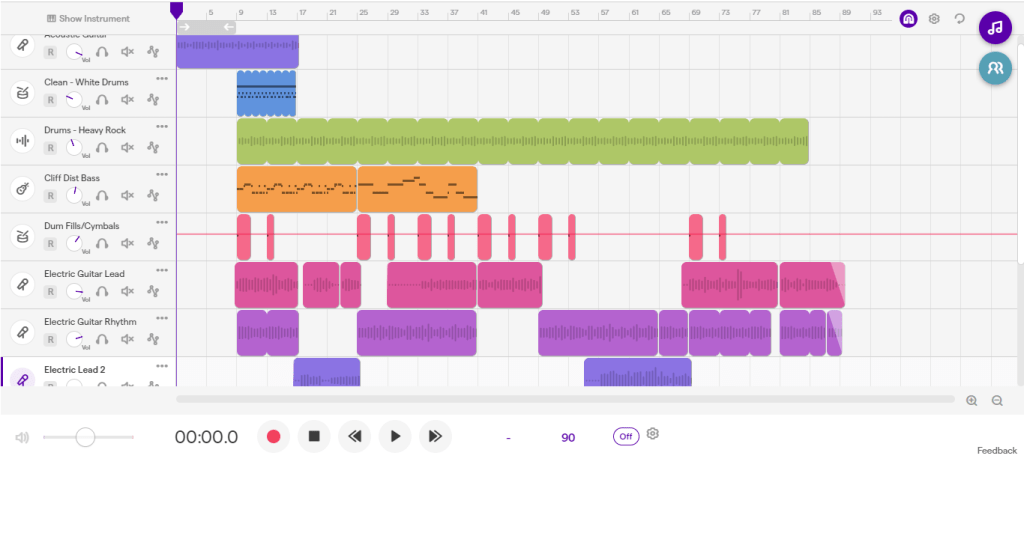
This is a picture of the final project which utilised trimming, fade outs, MIDI, loops and other techniques. I look back and though I didn’t do things the best or in the most efficient way, I learned how I would do it better next time.

A guest speaker also mentioned how project-based learning works well with technology and that after completing this project, it is a teaching style that I have come to appreciate; I feel that this experiential learning is summed up well with this quote by Confucious “I hear and I forget, I see and I remember, I do and I understand”.

‘Stalefish’ 3rd Recordings

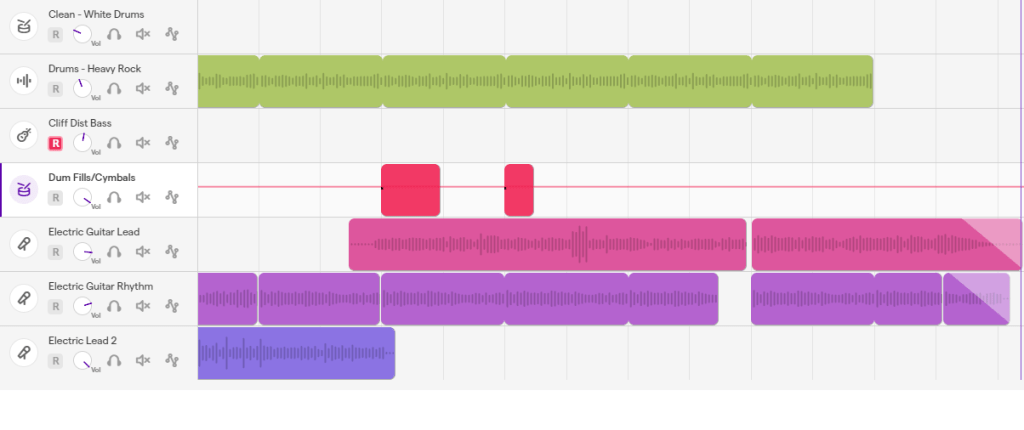
This is the latest recording of my project but I aim to keep improving it up until the day of presentation https://drive.google.com/open?id=1XVNxn4c6R59VNasUOaxUkGNAM42S7pQX. I learned a few basic recording principles, it’s better to record (for example) a guitar lead track completely on the same day or at least write down all the amp and special effect settings to keep the tone consistent. I have recorded my piece over different days and have been composing for different parts sporadically and realised that my guitar tones slightly changed throughout the track for the same part; I understand that this is a rookie error but I definitely learned my lesson. Today I erased all tracks that are no longer useful and experimented with some different layering but one of the coolest things I got out of today was the very minuscule manipulation of rhythm. For some reason when I record to the metronome and play it back there is always a slight delay no matter how perfect my timing is; this was slightly annoying when it came to matching all recordings and snapping them to a block especially with MIDI. This ended up being useful as I experimented on the placement of an instrument recording e.g. behind the beat, trimming sections and moving them slightly to the right; this was especially a cool effect when working with the harmonic guitar lead parts and the guitar solo.

added some fade outs at the end

KAME week 12

This was by far the hardest song I have learned this semester, it features a lot of 9ths and sus chords and as you can see I struggled qite a bit. ‘Every Breath You Take’ by The Police was taken from the KAME song list and I chose it cause I thought it would be a challenge… I was not wrong. I feel like at the end of this semester my keyboard playing is at the best it has ever been and I aim to continue playing keyboard but I think I’ll use the YouTube MIDI piano tutorials that I used last week to learn popular songs; they are also differntiated so as I get better I can play more complex arrangements of the same song.

KAME week 11

Today I did a review of all songs I have learned thus far and practiced playing them in another key. I practiced ‘Mental as Anything’ in the key of D, ‘April Sun in Cuba’ in the key of E and the Blues progression in the key of D. I wanted to refresh everything I’ve learned to play i.e. major 7ths/9ths, minor 7ths/9ths, sus chords and inversions. This video format would have been more useful if I had been using this earlier in the semester 🙂 but better late then never; worked on this song below.

‘Stalefish’ 2nd Recordings

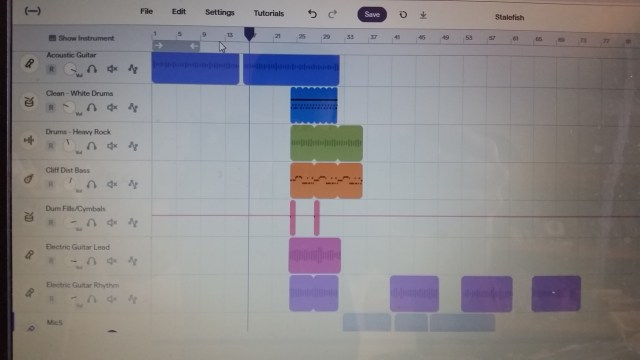
Added some electric guitar lead, electric guitar rhythm and drum hits. I experimented with the dynamic and condenser mics, so now there a bunch of snippets that aren’t part of the main song but are there to compare different tones or use parts of them later. I didn’t think this would happen but I actually prefer the sound of the condenser mic on the electric guitar amp; here is what I’ve got so far https://drive.google.com/open?id=1R8WabBKKEJBPpXxzlyXwOJQ6D_sQ9vRq.

I labelled the tracks now!!! Acoustic guitar has a part from the start that I may use later. I want to add more drum fills but I just have cymbal hits so far in Drum Fills/Cymbals. Electric Guitar Rhythm has a lot of snippets where I experimented with different tones on my special effects pedal. The very bottom Mic 5 is the dynamic microphone recording of the electric guitar rhythm which I didn’t like as much.

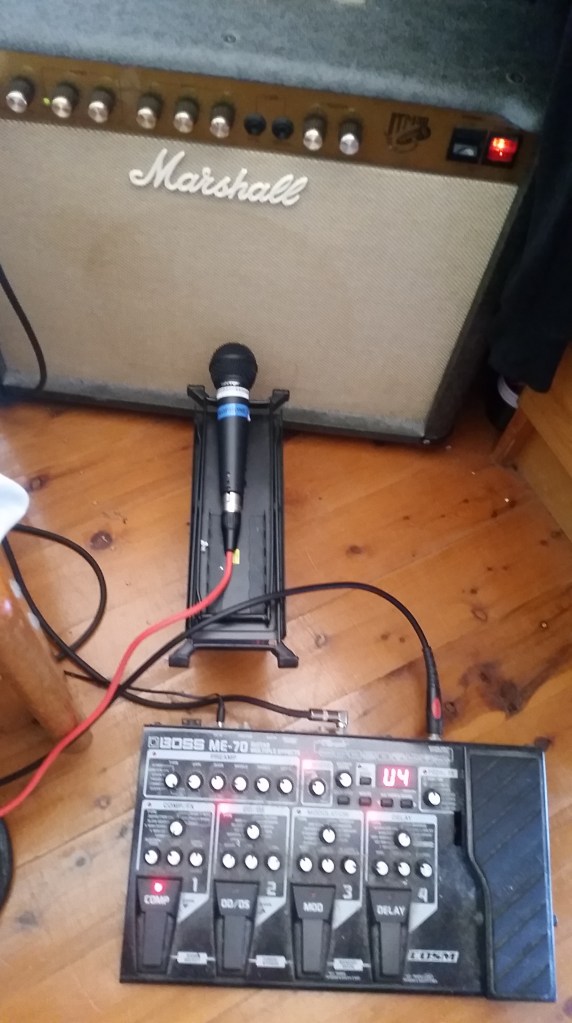
I watched some videos on how to mic a guitar amp. The first YouTube guy I watched scared me as he said the sound of the amp is not what you are used to hearing (and sounds bad) and you should mic the speakers that are attached to the amp. I was worried because I don’t have speakers ….. but I then discovered 1000 videos of guys that mic their amp. There are many ways to skin the proverbial cat but after all the direction experimentation and as far as I can tell, the best thing to do is to place the mic an inch away from the cone and looking directly at it. Lol I had to rest the mic on some books and a closed guitar footstool, the things you do when you don’t have a mic stand :). I found the video below quite useful.

Design a site like this with WordPress.com
Get started