‘Stalefish’ 1st recordings

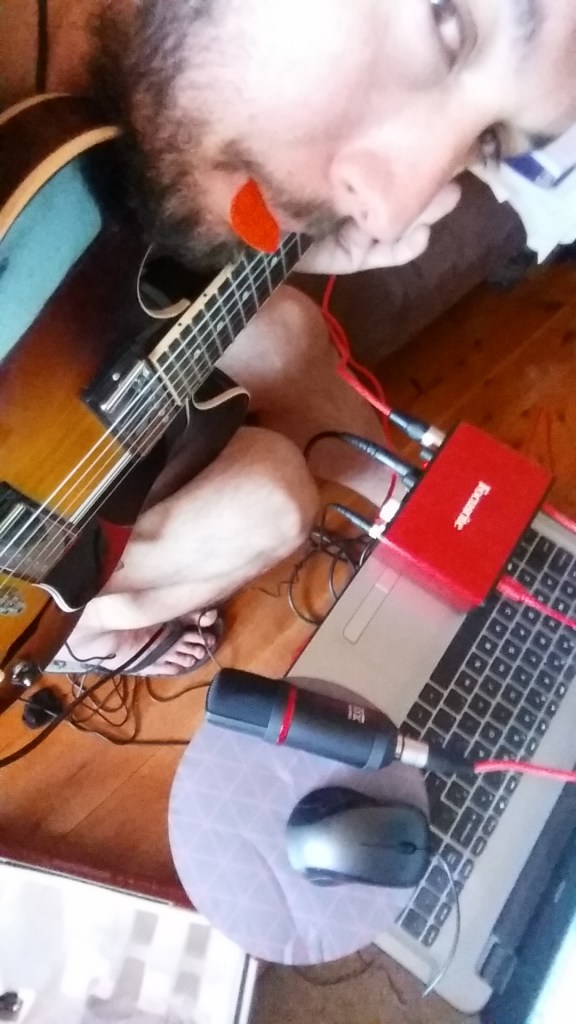
Stalefish is a skateboarding/snowboarding trick in case you were wondering; and for those of you who weren’t wondering what it is, here is the recording https://drive.google.com/open?id=1qVkgc6GKi3TZIxIhtWyjOWD6Dm-jgx1N. I have a few tracks that have been left in there and some that aren’t consistently used, this was done so I could hear differences and possibly change them in the future. As you can see I did the recording in my awesome ‘studio’; I first recorded the guitar by hooking it directly to the audio interface (0 to 40 sec on the recording) then did another recording of the same part using the condenser microphone (40 sec and onward). After I recorded the part, I experimented on the guitar tracks by adding filters, equalizing and adding reverb but I was pretty happy with the condenser mic recording on its own. I just have to record the guitar part louder next time as I didn’t realize the mixer and mic line knobs were turned down. I could turn everything else down in Soundtrap but it didn’t sound the best and I have already put the guitar volume on max.
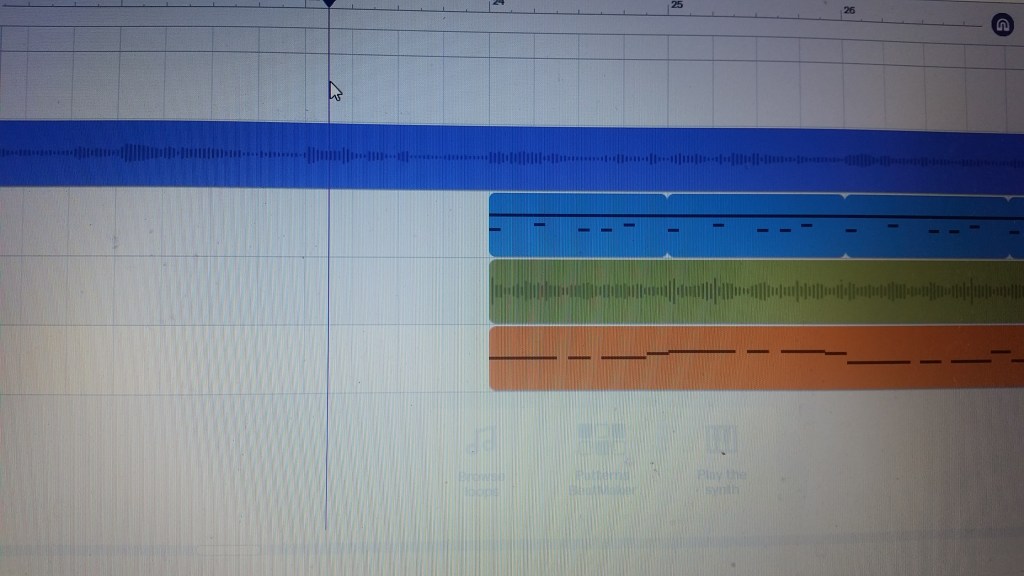
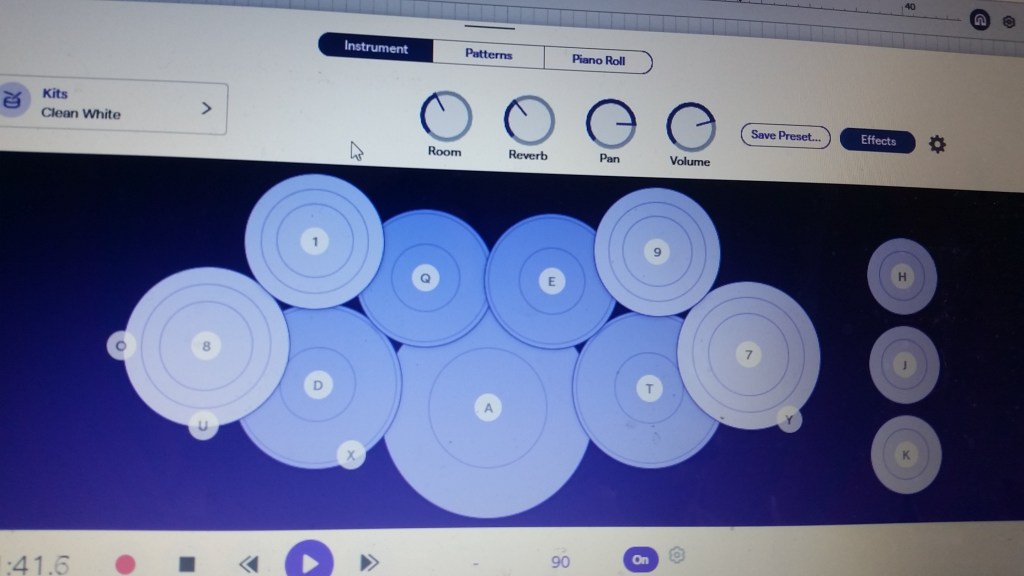
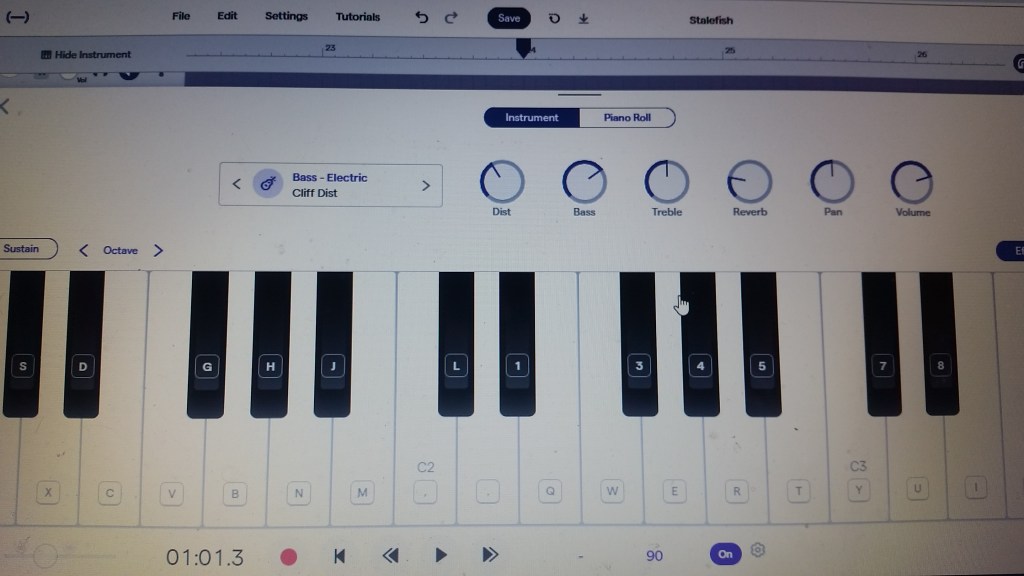
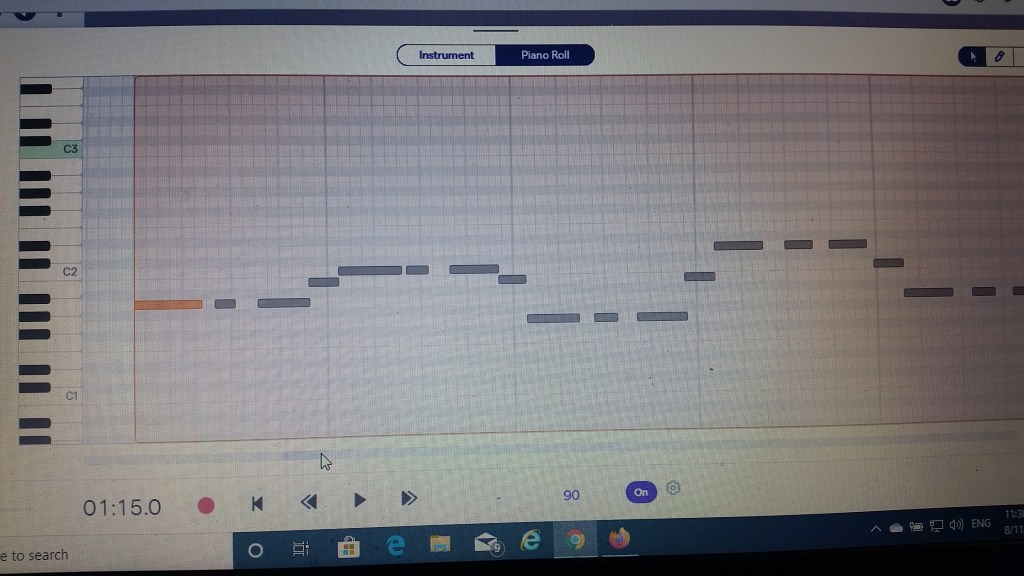
I didn’t get the value of MIDI and moving the little square blocks around till I had to make a drum and bass line; it’s surprisingly difficult to play the computer keyboard in time.

  • Purple is the guitar track
  • Light blue is a MIDI drum track I made
  • Green track is a ‘heavy rock’ drum loop
  • Orange is a MIDI bass line I made
This was way too hard to play in time with the metronome so I used the step sequencer instead
Here’s me playing the bass line and recording it
Here’s me fixing the bass line that I made

I want to add an electric rhythm guitar part, electric lead and a separate track for drum fills. I spent time on all the tracks experimenting with effects and other adjustments, still not sure if I’m improving them and haven’t worked out what to do in regards to panning but that’s a YouTube search for a future session.

Last Class :(

We did a quick recap of all things examined thus far then we discussed the pros and cons of technology on the brains of the youth. Research showed that over-stimulation of the brain from technology made children prone to behavioral problems and engagement in cognitive activities like attending museums and building things improved mental health and well being. As always there was a flip side to the coin, Sugata Mitra conducted an experiment on his village using technology for self-learning and the results are fascinating (link for the Sugata Mitra talk) https://www.youtube.com/watch?v=dk60sYrU2RU. “Education is a self organising system, where learning is an emergent phenomenon” a revolutionary theory by Mishra. After watching the clip Mishra shows that discussion between students was a vital part of the learning process, but I also noticed when he is teaching a class, that there are not enough computers for every student; this turned out to be a stroke of genius. In our western culture there is a push for every student to have access to a device, but after seeing Mishra teach I realized that this was actually counter-productive.

Halfway through class we attended a talk from Tim Byron. It was called ‘Raise earworm awareness: Measuring involuntary musical imagery with experience sampling methodology’. Some points I took away are Earworms are in consciousness, memory and are a phenomenon of memory.

Chicks, Worm, Eating, Feeding, Poultry

KAME week 10

I worked on 9th chords from a few weeks ago to make sure that I was still familiar with the voicings. I just went through major 9, minor 9 and dominant 9 chords on the same root note. The dominant 9 was the most difficult chord to play of all. It’s tricky to play all the notes in one hand so some YouTubers suggest spreading the notes through 2 hands or omitting the 5th.

Digital Stress

Dreading the call

According to the research the average computer user (a phone is a computer as well) checks 40 websites a day and changes Apps 36 times a hour. I like to consider myself quite a technophobe but am guilty of getting caught in the occasional YouTube rabbit hole for hours at a time; like there’s always an interesting ‘up next’ video, like about how someone has undisputed proof that reptilian shape-shifters make all the music in the Top 40… I mean… I’d be crazy not to watch it! This brings us to the next point that as humans we cannot multitask unless concentration is dramatically lowered on one of the tasks. At best we switch between tasks quickly as to not overload our cognitive processes. Humbo mentioned something that I feel with technology and that is when someone texts me, I get an underlying anxiety knowing that someone is waiting for a response. This constant contact availability is something that the youth of today will have a harder time dealing with than any other generation before. Humbo mentioned some ‘digital hacks’ to use time more efficiently and keep us a bit safer from technology: Wunderlist App, Zettelkasten and Keyboard Maestro. Just when I was starting to feel like I was becoming competent in technology and having my life somewhat organised, Humbo had Apps managing his Apps! I’m very much into making handwritten notes on paper, especially for To Do lists; nothing beats the feeling of crossing something off. Some ‘life hacks’ to remember to stay healthy are to eat, sleep and exercise well, but also spend a bit of time in nature 🙂

Forest, Moss, Nature, Lush, Green

Re-Mash and MixUp

We examined the whacky world of ‘remixes and mashups’ as a genre, looking at artists like Girltalk and Kutiman. It is definitely a scourge to all traditionalists who do not consider it music, but I’ve always been a fan of Grandmaster Flash so it didn’t seem like a strange concept to me. Here I am getting ready to show off my mad DJ skillz.

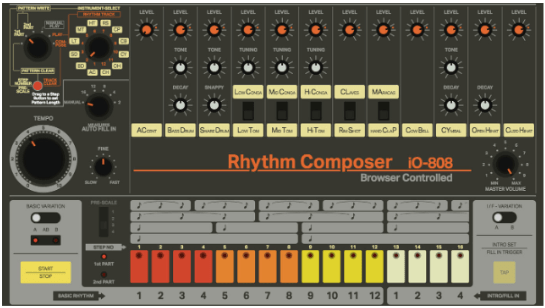
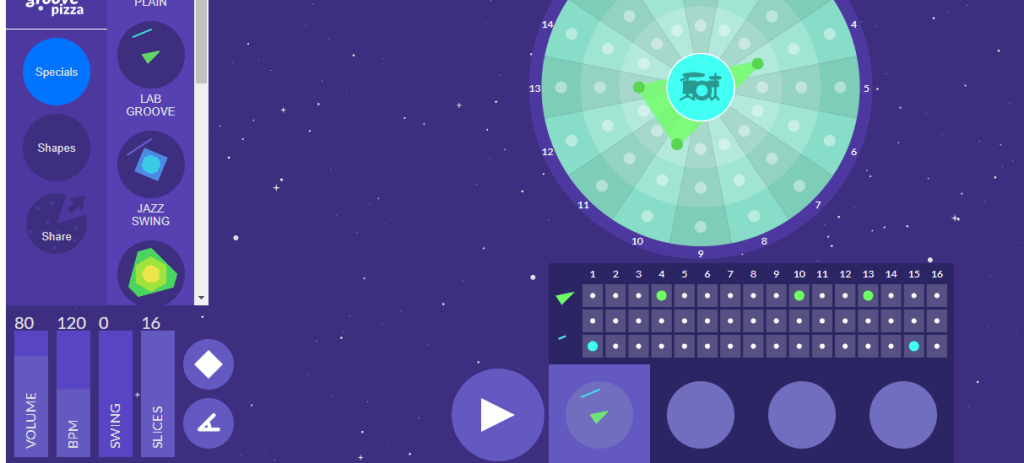
There was discussion about electronic music history and how the drum machine came about to cut out the need to pay a drummer. The only problem is that its tone was not suited for acoustic music backup so it slowly morphed into a staple of hip hop and techno/dance music. There was talk of the ‘experiential learning’ possibilities with step sequencers such as the io-808, DM1 app and Groove Pizza. The interesting thing about Groove Pizza (bottom picture) is that it is a circular step sequencer. As uni students the way we defined the roles of different parts of all these step sequencers varied, so it would be interesting to see how a novice high school student interpreted what was going on as they used them.

Here’s a slice of Groove Pizza that I made https://drive.google.com/open?id=1290fwbxyhCw9s4ypgE40adtpD5KwgzyT.

Home Sweet Home Studio

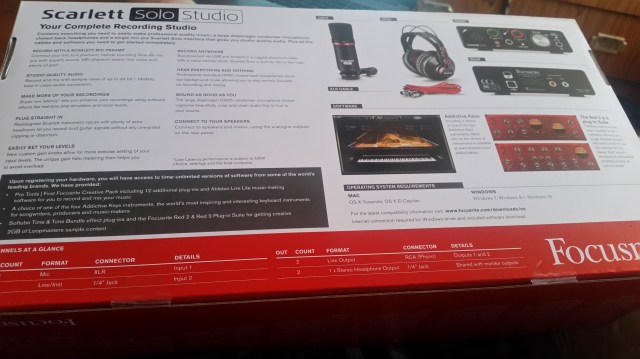
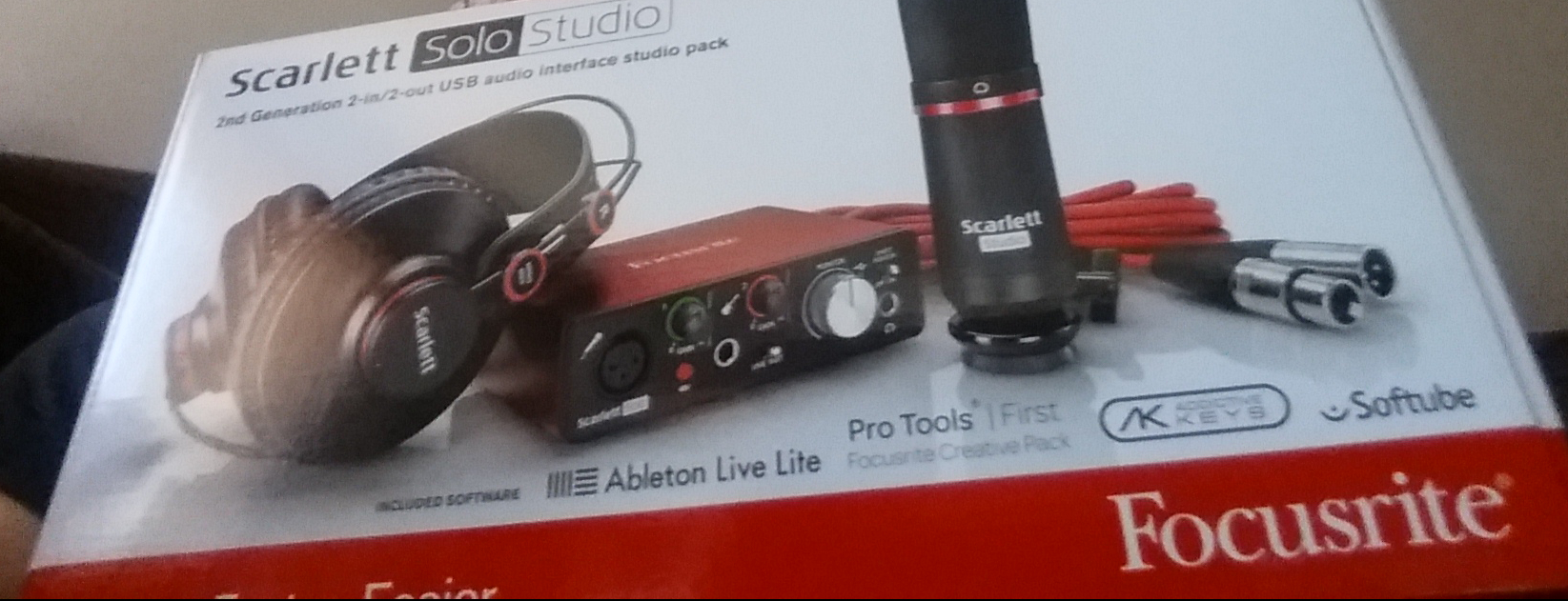
Okay officially there was no class this week but I am excited to present the very first time I’ve ever owned studio audio equipment! Before smart phones were a thing I used a tape/voice recorder to record my guitar compositions… Can you imagine? I can’t even transfer the recordings to my laptop! Today I picked up a ‘Scarlett Solo Studio (2nd Gen)’ pack made by Focusrite for 274 smackeroos. I first heard someone recommend it on a random YouTube video which I have since forgotten, but I told myself it was a sign as it would help me do my uni project and also help me achieve one of my long term goals of recording my music (properly). It comes with the Scarlett audio interface, a large diaphragm condenser mic, headphones, XLR cable, Pro Tools First, Ableton Live Lite and a bunch of plugins and loops. I’m really keen to see all aspects of this package in action, I was so excited that I didn’t even consider the fact that I don’t own a mic stand, but I won’t let that stop me!!!

The Hunt!

Today was a seminar on the use of technology in the classroom in regards to running a self-managed website. The guest teacher had made an interactive website where students can select what they wanted to do in the lesson and slowly progress through the levels e.g. Garage Rehearsal, The Local Gig, National Tour and International Fame; each of these subjects had many components like listening, composing etc. The teacher said this method was introduced as a means of classroom management as the kids at her school were very unruly, so explicit teaching through online tutorials seemed to be effective. An idea that I got from this class was that differentiation can occur in a single activity/task itself, you don’t need to have 3 separate tasks for beginner, intermediate and advanced. We concluded the class by having an online scavenger hunt, answering musical questions and acquiring musical images utilizing gmail, google classroom, google docs and google drive. It was useful as I am not well-versed in any of these programs and as you can imagine … I didn’t finish first 🙂

Oooh also got a link to an online version of an io-808 drum machine (expensive in real life) https://io808.com/.

KAME week 9

This week I spent more time learning ‘April Sun in Cuba’. I aimed to coordinate my left hand bass and right hand chord playing. Transitioning between chords is still a weakness but also I struggle to get the correct bass in the left hand and get the right hand chords all at the same time. There was definitely an improvement in my playing; I also watched this video to learn more about piano chords and seeing how pianists play progressions in different keys.

KAME week 8

I decided to follow up on the sus chords that I worked on the other week. I researched the chords of a song I knew well and decided to learn it on keyboard, ‘April Sun in Cuba’ – Dragon.

It features an iconic sus4 to major triad riff (Asus4 to A). This song was tough as it features chords that change quickly ‘D’ to ‘B minor’ but it was helpful as it featured a few different qualities like major, minor and sus chords. As you can see in the video, my left hand occasionally drops out as I struggle with the coordination of playing with both hands.

Meet Your ‘Maker Movement’

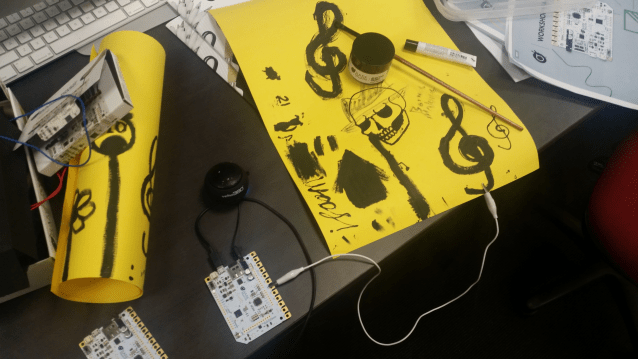
Discovered the ‘Maker Movement’. It is a movement that utilizes ‘Maker Spaces’ which are physical spaces that people can rent out and use re-purposed tools or industrial equipment. In these spaces people work hands on (often collaboratively) to solve problems. We had a ‘Maker Space’ set-up in class with work stations; here is one station below. When the white wire came into contact with the black ink it made a sound, I am still baffled by this sorcery. In regards to education the use of workstations mean that students can discover and experience learning at their own pace and without a teacher guiding them through it.

I gave my ‘lift pitch’ which was a choice between two ideas.

  • write and record a piece of music using digital devices that are completely new to me (everything is new to me!), this would involve me buying a cheap audio interface and microphone to use with Soundtrap
  • If I was able to accomplish this with relative ease I wanted to create a short story with audio using ‘tumult hype’

I chose this task as it would help me outside of uni, as I always wanted to record guitar tracks I composed and make a song with multiple instruments, instead of just recording guitar parts on my phone and hoping that I remembered what I wanted to do with them later.

Design a site like this with WordPress.com
Get started